
Why your model should drive decisions — not just survive investor scrutiny
When most founders sit down to build their first financial model, it feels overwhelming — but that’s part of the job. You push through because you know it’s required to raise money and build credibility.
The problem shows up later. Over time, models grow legs: too many tabs, too many versions, too much time spent reconciling differences instead of making decisions.
A founder once joked to me, “We had more models than customers. Every investor conversation created a new one — and none of them were useful.”
The issue isn’t the spreadsheet. It’s the mindset. When a financial model becomes a box to check instead of a decision-making tool, it quietly drains founder time and erodes confidence — even if it looks great on the surface.
A Financial Model Isn’t About Prediction — It’s About Understanding and Decision Making
No one expects your financial model to predict the future. What it should demonstrate is understanding of how the business works. Forecast accuracy matters once you have years of historical data — not when you’re still defining how the business actually works.
When founders focus on precision — trying to get every decimal perfect — they lose sight of what a good financial model is really for: confidence in decision-making.
The goal isn’t to be right. The goal is to understand how your decisions impact performance.
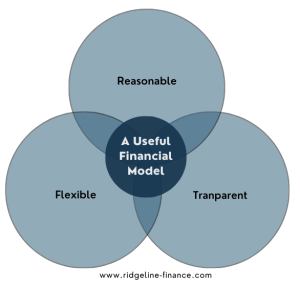
A useful financial model has three characteristics:
- Reasonable — grounded in realistic assumptions.
- Transparent — easy to explain, with key drivers clearly visible.
- Flexible — simple to update as the business evolves.
Investors and boards don’t expect your model to be correct. They expect you to understand the key drivers of the business — and how changes today affect outcomes over time.
The Most Common Mistake: Building for Others, Not for Yourself
Most founders build financial models to satisfy external audiences — investors, banks, or advisors. And in doing so, they stop using the model as a management tool and start treating it as a compliance document.
The result? Beautiful models that no one actually uses.
A founder I work with had an immaculate investor model. Every number tied perfectly. But when they needed to run a simple scenario analysis on customer acquisition costs, they didn’t know where to start. Their model looked great, but it wasn’t built as a management tool.
If your financial model isn’t helping you make better decisions, it’s not doing its job. When it becomes a true decision-making tool, the proliferation of extra versions usually fades — not because investors stop asking questions, but because confidence in the model increases.
How to Build a Financial Model That Actually Helps You
The goal isn’t to build a perfect model. It’s to build one that you can explain to investors and is strong enough to guide real decisions.
1. Start with outputs, then identify the drivers that matter
Begin by defining what you need from the model: your core financial statements and a small set of KPIs. Those outputs should point you to the handful of assumptions that truly drive the business.
For most early-stage companies, 5–7 drivers explain nearly everything — growth, churn, pricing, headcount, customer acquisition costs, and a few major expenses. Spend your time here. These should be inputs that drive the model, not emerge as outputs.
2. Include other costs — but don’t overanalyze them
You’ll have expenses that matter in aggregate but not individually: insurance, future software, unexpected hires, external help. Include them, but don’t spend hours perfecting assumptions that won’t change decisions.
Placeholders are fine. I use them all the time, especially for software and tools that evolve quickly.
3. Update regularly, not constantly
Revisit your model at least once a month. Businesses change quickly, and your model should reflect reality — not last quarter’s assumptions.
A model that’s updated consistently builds confidence with your board and gives you a clearer signal when decisions need to change.
4. Communicate in plain English
When reviewing your numbers, aim to explain them this simply:
“If churn stays under 5%, we’ll hit break-even in 10 months. If it drifts to 8%, we’ll need to raise two months earlier.”
That level of simplicity builds credibility — and keeps everyone aligned. If your board wants to dig in more, great. You’ve got a model that will help them. But most of the time the deep dive is up to them.
The Bottom Line
Building and maintaining a financial model isn’t a finance chore — it’s a leadership habit.
The real value of a financial model comes from the clarity of the decisions it enables.
If your financial model feels more like a burden than a decision tool, that’s usually the best time to have a conversation.